

Road to the White House:
Presidential Campaign Simulation

Introduction
The Road to the White House is a multi-day, immersive role-play designed for high school and dual-credit American Government students.
Students form political parties, develop platforms on real contemporary issues, navigate primary elections using strategy simulations, and run full presidential campaigns complete with marketing, social media, polling, debates, and election day results.
The simulation blends realistic political decision-making with structured randomness through voter blocs, polling simulations, media events, and campaign crises—mirroring the unpredictability of real-world elections.
Over 5–10 class periods, students engage in platform writing, campaign strategy, televised debates, electoral simulations, and reflective analysis, culminating in a final election and debrief.
This project is ideal for dual-credit government, AP-level civics, and project-based learning classrooms, promoting civic literacy, critical thinking, collaboration, and public speaking.


Roles and Team Setup
· Form Teams: The class will be divided into teams of about 4–5 students. Each team represents a new political party.
· Initial Roles: Initially, all team members are party founders and advisors. Later, each team will choose one member to be the presidential candidate, with others acting as campaign staff (campaign manager, communications director, policy advisor, etc.).
· Party Identity: Come up with a party name, logo, and slogan that reflect your values. Be creative but keep it realistic – imagine a name and branding that could exist in today's political landscape.
· Realism and Respect: Treat this as a serious simulation. Parties should address major contemporary issues with serious proposals (e.g. economy, healthcare, education, national security, climate change) – no joke or fictional issues. Teams can have distinct ideologies, but all platforms should be grounded in real-world concerns and facts. (Remember, most voters care about a range of issues – in 2024, about 81% of voters said the economy was “very important” to their vote, and a large majority cited multiple issues as very important. Your platform should likewise cover several key issues.)
Day 1: Introduction & Party Platform Brainstorm
ASSIGNMENT:
Goals: Form your party and start drafting your platform. By the end of Day 1, each team should have a party name and a rough outline of its platform planks.
· Intro to Simulation: The teacher will explain the project scope, deliverables, and schedule. We’ll review how real U.S. elections work (primaries, general election, debates, etc.) to set the stage.
· Form Parties: Break into your teams. Spend a few minutes getting acquainted and begin discussing what your party stands for.
· Choose a Party Name & Slogan: Come up with a name that captures your party’s identity (serious or catchy but realistic, e.g. “Forward America Party,” “Renewal Coalition,” etc.). Brainstorm a campaign slogan (a short phrase for your candidate’s message, e.g. “Building a Greener Future”).
· Identify Key Issues: As a group, list 4–6 key issues your party cares most about (for example: the economy, healthcare, immigration, climate change, education, civil rights, national security, etc.). Consider issues that are in the news and important to voters right now – effective platforms address voters’ real concerns.
· Assign Research Tasks: Divide up issues among team members to research as homework or for Day 2. Each person should find current facts, data, or examples to support your party’s stance on their assigned issue (e.g. economic indicators, climate statistics, policy examples).

Day 1 (Cont’d): Platform Development and Writing
Goals: Finalize your party platform and begin writing the Platform Paper. By the end of Day 2, you should have a clear platform outline or draft.
· Share Research Findings: Team members report back on the issue research they did. Discuss and decide your party’s position on each key issue. Be specific: what policies or solutions do you propose? (For example, if climate change is an issue, do you support investing in renewable energy, joining international agreements, etc.)
· Develop Platform Planks: Write a brief plank (a few sentences or a paragraph) for each issue stating the problem and your proposed policy stance. Ensure these planks align with an overall ideology or theme for your party.
· Platform Paper Drafting: Begin organizing these planks into a coherent Party Platform Paper (about 2 pages). The paper should include:
· Introduction: Briefly introduce your party and its core values or ideology.
· Issue Planks: For each major issue, a short section with your party’s position and at least one supporting fact or argument (cite any real facts/data you use).
· Conclusion: Sum up why your platform is what the country needs.
· Peer Review: Exchange platform outlines with another team (or within your team) for feedback. Does it cover a broad range of voter concerns? Is it persuasive and realistic? Remember that in real elections, successful platforms address many issues (voters often say five or more issues are very important to them).
· Revise: Incorporate feedback and refine your platform. Ensure tone and content are serious and fact-based.
Homework: Finish writing the Platform Paper (2 pages typed). Each team will turn this in at the start of Day 3. All team members should contribute to writing and editing. Make sure the final paper is well-organized and proofread.
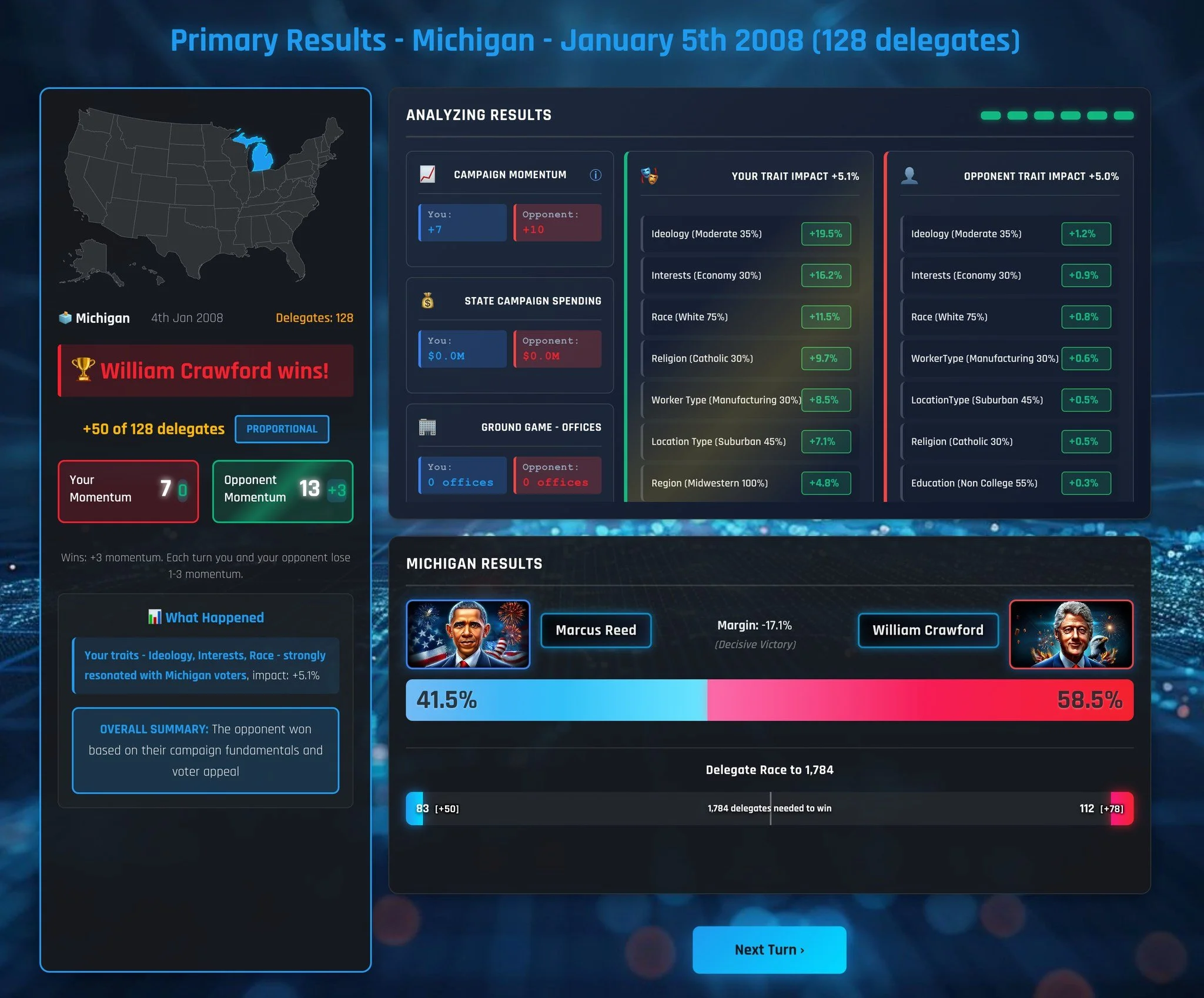
Day 2: PowerPlay Chronicles
Goals: Learn how primary elections work and select your party’s presidential candidate.
· Playing PowerPlay Chronicles: In class (or computer lab), you will play the PowerPlay Chronicles web game as a team or individually. CLICK HERE TO PLAY THE GAME (NOTE: This game works best on a computer/laptop, and you can unlock premium features with the code BCCS2026).
This is a presidential campaign simulator where you act as a candidate going through primary elections. Your campaign advisors in the game will propose different strategies to win the primary, and you’ll need to decide which advice to follow. Use this experience to see how campaign strategy and decision-making can affect primary outcomes (e.g. which states to focus on, how to handle debate questions, etc.). Pay attention to how even confident advice can sometimes lead you astray – the game is designed to illustrate the tough choices in a campaign.
· Discussion: After playing for about 20–30 minutes, pause to discuss:
· What strategies worked or failed in the game? (For example, did focusing on one region pay off, or did listening to one advisor over another change the outcome?)
· How do primaries differ from the general election? (Consider voter base, messaging differences, etc.)
· What surprises or challenges did you encounter (e.g. unexpected debate questions or events in the game)?
· Connecting to Our Simulation: As a class, talk about how lessons from the game might apply to your own campaigns. Real primary campaigns require careful resource allocation and responsiveness to public opinion; keep this in mind for your strategy.
Day 3: Candidate Selection & Intra-Primary Simulation
Goals: Choose a candidate to run for the Presidency and create a campaign team to support your party’s chosen candidate.
· Candidate Nomination: Now, each team will choose their presidential candidate. Within your team, if multiple people want to be the candidate, you can hold a quick intra-party primary:
· Each interested team member can give a 1-minute pitch or speech to your team about why they’d be a good candidate to represent the party.
· The team can then vote or come to a consensus on who will be the nominee. (Consider who has good public speaking skills and can confidently represent the platform – but everyone should have a role in the campaign even if not the candidate.)
· Once decided, announce your nominee (and perhaps a fun choice of a running mate/VP from within the team for flavor, if you like).
· Assign Campaign Roles: Now that you have a candidate, assign roles to other team members:
· Campaign Manager: Coordinates campaign tasks and strategy, keeps team organized.
· Communications Director: Crafts the messaging, talking points, and handles social media/posts.
· Media/Tech Coordinator: Designs posters, videos, or ads; manages any visual marketing.
· Policy Advisor: Helps the candidate prep on issues, fact-checks statements, and advises on debate prep.
· (Teams can define roles flexibly or have members share duties if preferred.)
By end of Day 3: Each team has a named presidential candidate and defined roles for each member. Everyone should be clear on their responsibilities moving forward.
Day 4: Campaign Strategy Session
ASSIGNMENT: CAMPAIGN STRATEGY MEMO
Goals: Develop a strategic plan for winning the general election. Determine how to present your candidate to the voters and differentiate your party.
· Understanding the Electorate: Discuss as a team who your target voters are. Are you aiming for younger voters, working-class, a particular region or the whole country? Consider what groups might be most persuaded by your platform. (For realism, you can assume our class/school represents a cross-section of voters. Think about what issues matter to your peers as voters.)
· Strategy Brainstorm: Outline your overall campaign strategy. Consider elements such as:
· Key Messages: Pick 2–3 top messages or themes to emphasize (e.g. “Rebuilding the Economy for All” or “Justice and Climate Action Now”). These should align with your platform and what you think voters care about most.
· Strengths & Weaknesses: Identify your candidate’s strengths to highlight (experience, charisma, strong stance on X issue) and any weaknesses to mitigate (limited experience, controversial platform points, etc.). Plan how to handle the weaknesses if opponents bring them up.
· Opponent Analysis: Think about the other parties/candidates in the class. How do you differ? What advantages do you have, and where might they attack you? Prepare some counter-arguments or comparisons.
· Campaign Timeline: Plan what you will do in the coming days. For example, when will you release certain announcements? When will you focus on practice for the debate? Schedule out the tasks so you’re prepared for each upcoming phase.
· Campaign Materials Planning: Decide what campaign materials you will create (to be executed on Day 5):
· Will you make posters or flyers to put in the classroom or hall?
· Design a campaign logo or button?
· Create a short video or live commercial (if feasible) or an audio jingle?
· Prepare a slide presentation or pamphlet for voters explaining your platform?
· Plan a social media strategy (even if simulated): what kind of posts will you make? What hashtag could trend for your campaign?
· Consult Advisors/Teacher: If you have questions about what’s allowed or need ideas, consult with the teacher (acting as the election commission or a senior advisor). Make sure your plans are realistic for the timeframe and resources.
By the end of Day 4: Your team should have a clear plan of attack for the campaign. This includes knowing what materials you will produce, what your main messages are, and a rough timeline of campaign events (e.g. “Release education policy proposal on Day 5,” “Debate on Day 8,” “Final rally speech on Day 9,” etc.).
Day 5: Campaign Marketing and Social Media Blitz
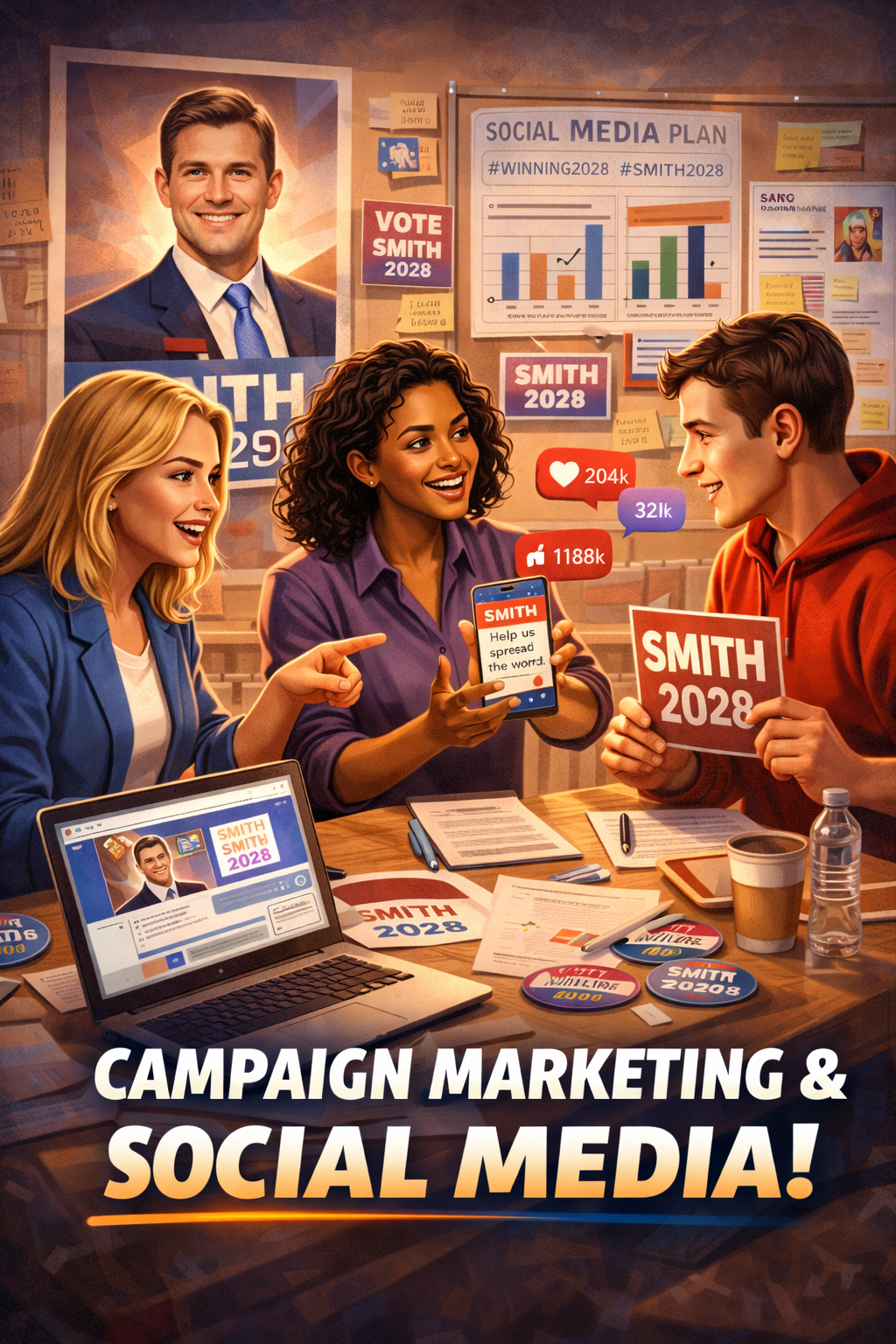
Goals: Create the content and materials for your campaign, and start “getting your message out” to the voters (classmates and possibly other audiences).
· Design Campaign Materials: Teams work on producing the campaign items planned:
· Posters/Flyers: Create at least one poster or flyer that includes your candidate’s name, photo (optional), slogan, and key promises. Make it visually appealing and clear. You can hand-draw this or design digitally and print – creativity counts!
· Social Media Posts: Write a series of mock social media posts for your candidate or party. For example, draft 3 tweets (on paper or slide) and an Instagram post or TikTok idea. These should highlight different aspects of your platform or respond to current events. (Keep the tone professional and realistic; even humor should be appropriate.)
· Campaign Video or Ad (optional): If resources allow, film a short campaign ad or create a slide show as a commercial. This could be a 30-second spot where the candidate speaks directly to voters or a narrated issue ad. If not filming, you might storyboard it on paper or at least script what the ad would say.
· Merchandise/Other (Optional fun): Design a campaign button, bumper sticker, or tagline merchandise idea. This isn’t required, but it can show extra creativity.
· Online Presence (Simulated): Consider creating a simple campaign website homepage (on a poster or doc) with a bio of the candidate and platform highlights. Alternatively, prepare an “About the Candidate” handout for voters.
· Messaging Consistency: As you create these, ensure all materials carry a consistent message and branding – use your slogan, repeat core themes, and use similar colors or logos. Real campaigns keep their branding uniform for recognition.
· Mid-Campaign Update: Midway through class, each team will briefly update the teacher on their progress. The teacher may allow a quick “campaign press release” where each team shares one new policy proposal or endorsement they’ve “received” to the class. (This is a chance to practice public speaking in a low-stakes way and drum up interest. For example, “Our candidate is proud to announce our education plan: we will provide free community college...”). Use this to get comfortable addressing the class before the big debate.
· Voter Engagement: If possible, start engaging with the “voters”. You might put up your posters in a common area (with permission) or share a sneak peek of your campaign ad with another class to build hype. (Optional: If other classes or school staff will be voting, consider how to reach them – maybe a short presentation or handing out flyers.)
By end of Day 5: You should have most of your campaign materials ready or near completion. Save and organize everything (digital files, posters to hang later, printouts, etc.). The class may end with a quick walkthrough by the teacher to see each team’s materials and give any last-minute feedback.

Campaign Launch!
Goals: Let the voters know who you are and what you think about the issues in our first TOWN HALL DEBATES!
FIRST: Launch your campaign with a social media blitz package.
SECOND: Out-perform your opponents with stump speeches and town hall debates before the primary elections
Debate Prep Workshop
Goals: Prepare thoroughly for the upcoming televised debate. By the end of Day 7, each team should be ready with clear arguments, practiced answers, and debate tactics.
· Debate Format Overview: The teacher will outline the format for tomorrow’s debate. For example: Each candidate will give a 2-minute opening statement, respond to a series of questions from the moderator (the teacher or a guest acting as a journalist) on various issues, have opportunities for brief rebuttals, and then a 1-minute closing statement. All candidates will be on stage together.
· Anticipate Questions: Brainstorm possible debate questions. Likely topics will include the major issues each team has in their platform (economy, healthcare, etc.), current event questions (related to any “fate” events or news), and maybe character/leadership questions. Write down at least 5-6 questions you expect.
· Craft Key Messages: For each anticipated topic, decide on 2-3 key points or sentences your candidate must get across. These should highlight your platform’s strengths or distinguish you from opponents. Keep responses succinct and clear.
· Practice Q&A: Have a mock debate within your team:
· One teammate (perhaps the campaign manager or policy advisor) acts as the moderator, asking the candidate questions (use the list you brainstormed).
· The candidate practices answering within a time limit (practice giving a 1-minute answer). Other teammates can play opponents, interjecting with possible rebuttals or criticisms.
· Practice rebuttals: have your teammates pose a challenging argument (“Our opponent’s healthcare plan is too expensive...”) and practice responding. Learn to pivot back to your message (“Actually, investing in healthcare saves money long-term, and what voters need is….”).
· Improve Delivery: Pay attention to speaking style – volume, clarity, confidence, and body language. Coaches (team members) should give constructive feedback: Is the candidate making eye contact? Speaking too fast? Need to be more concise? Also plan for calm demeanor: debates can be high-pressure, so the candidate should practice staying cool if challenged.
· Prepare Attack and Defense: Each team should identify one question to ask an opponent if allowed (some debates have a segment where candidates can pose a question to another). Also, anticipate one attack likely to come at you from each major opponent. Prepare a polite, factual defense for those attacks. (No personal insults – keep it issue-based and respectful.)
· Final Notes: Write bullet-point notes or flashcards for the candidate to review tonight – key facts, statistics, or quotes to use in answers. However, do not script everything; be ready to adapt if questions are different. Know your platform inside-out so you can answer anything confidently.
Homework (Candidate and Team): Candidates should rehearse their opening statement and review their notes. Teams can do a final run-through on a video call or group chat to boost the candidate’s confidence. Remember, a debate is a chance to show voters who you are and what you stand for, under pressure – preparation is the key to success.

Day 6: Dealing with the Unexpected – Fate Cards and Crisis Management (October Surprise)
Goals: Experience how random events can impact a campaign and practice responding effectively. By the end of Day 6, teams will have navigated at least one “controversy” or surprise scenario.
· Introduction to Random Events: In real campaigns, unexpected events – good and bad – occur regularly. Politicians must think on their feet. Today, each team will draw from the “Fate Deck” (or roll on a chart) to simulate a surprise event and gauge voter reaction.
· Fate Event Draw: The teacher has prepared a set of random event cards or scenarios. Each team will get one (or one per round) at random. Examples of events:
· Scandal! – An old controversial statement or photo of your candidate surfaces. You must respond to media outrage.
· Economic Shift! – The economy suddenly changes (recession or boom), affecting the credibility of your economic platform.
· Endorsement! – A popular local official or celebrity unexpectedly endorses your candidate, giving you a boost.
· Gaffe! – Your candidate misspeaks at a rally, and the clip is trending negatively.
· Foreign Crisis! – An international incident occurs. Voters are looking to see your candidate’s foreign policy stance.
· Debate Question Leak (or Surprise) – A rumor about a tough debate question leaks (or a totally unexpected question is going to come).
· Team Response Planning: For 10-15 minutes, discuss within your team how to handle your specific event:
· What public statement will you make? (Write a quick press release or social media response.)
· Does this event force you to adjust any positions or emphasize a different issue?
· How will you turn it to your advantage or mitigate damage? (For a scandal, perhaps apologize and pivot to your positive record; for an endorsement, hold a press conference to amplify it.)
· Roller Chart for Voter Reaction: After teams decide on a response, the teacher will simulate voter reaction. This might be done with a dice roll or pre-set outcomes:
· For example, a scandal might have a chart like: Roll a 6-sided die – on 1-2, minimal impact (voters largely ignore it); on 3-4, moderate damage (-5% support); on 5-6, severe damage (-10% support). The teacher will announce how your poll numbers change.
· Positive events (like endorsements) could give +5% if the team publicizes it well, or minimal bump if handled poorly.
· The teacher (or class) will also subjectively consider your response quality. A strong, timely response might reduce the negative impact of a bad event.
· Poll Update: The teacher will update the class “polling” based on these events. For instance, a chart on the board may show each candidate’s estimated support percentage after the events. (This poll can be very rough since we don’t have actual voters yet – it’s mainly to show trends. Alternatively, an anonymous straw poll of the class could be taken now to see who’s leading, serving as a mid-campaign snapshot.)
· Learning Moment: Discuss briefly: How did it feel to have a curveball thrown at you? What did you learn about crisis management? Campaigns require staying flexible and calm under pressure. Even in professional campaigns, “media challenges like fictional news broadcasts [and sudden events]” test advisors and candidates.
By end of Day 6: Every team has dealt with a random event and seen how it affected their standing. Take note of any adjustments you want to make to your strategy in the final days (you may want to address any lingering negative issue in the debate, or double down on positives).

Day 7: Presidential Debate Day 🎤
Goals: Conduct a realistic televised debate in class. All candidates will present their platforms and challenge each other on the issues. Voters (the audience) will form impressions to help them decide their votes.
· Debate Setup: The classroom is arranged like a debate stage. Each candidate (team’s nominee) sits or stands at the front. The moderator (teacher or designated student moderator) is prepared with questions. Teams can decorate their candidate’s spot with a name placard and party logo. We may even record the session as if it’s on TV (optional).
· Audience: Ideally, invite other students, another class, or school staff to watch if possible (to simulate a public audience). If not, the rest of the class who are not debating will be the audience and later voters. Encourage everyone to be respectful and attentive, as if this were a real nationally televised debate.
· Debate Ground Rules: Moderator reviews rules: time limits for each response (e.g. 1-2 minutes), no interrupting each other, respect is mandatory. The order of speaking will rotate to be fair. The moderator will enforce time (using a timer or bell).
· Opening Statements: Each candidate gives their prepared opening statement (1-2 minutes each) introducing themselves and their main message.
· Q&A Rounds: The moderator asks a series of questions. Examples:
· Domestic Policy (economy, healthcare, education): “What is your plan to improve the economy for middle-class Americans?” – each candidate answers in turn. Moderator may allow a 30-second rebuttal if one candidate is mentioned by another.
· Foreign Policy: “How would your administration handle relations with global powers or recent international crises?”
· Social Issues: “What will you do about [current issue, e.g. climate change or immigration]?”
· Character/Leadership: “What personal qualities make you the right person to be President?”
· (Include a question that was related to one of the random events if relevant, to see how they handle it publicly.)
· Candidate Interaction: Depending on format, after initial answers, candidates may get a brief chance to respond to each other. Keep it civil. Use rebuttal time to clarify your stance or point out a contrast (“My opponent said X, but our plan is different because…”). Avoid personal attacks – focus on policy and leadership.
· Closing Statements: After all questions, each candidate gets 1 minute to make a closing argument. This is their final pitch to voters – often a good place to reiterate their slogan or key promise and thank the audience.
· Debate Evaluation: As the debate proceeds, audience members can take notes. Once finished, thank all participants. If time permits, allow the audience a few minutes to ask their own questions or have a short informal Q&A with the candidates – this can be engaging and unexpected (if schedule allows).
· Post-Debate Poll: Immediately after the debate, conduct a quick poll or ballot:
· You may hand out debate feedback forms or simply ask the audience, “Which candidate do you feel did the best job tonight?” Students can vote anonymously on who “won” the debate or rank their performance. This is not the final election vote, but it gives a sense of momentum.
· Discuss any very quick impressions: What moments stood out? (The teacher will ensure this discussion stays polite and focused on issues, not personal jabs.)
· Wrap-Up: Congratulate all teams for their hard work in the debate. Emphasize that in real life, debates can sway undecided voters, so it’s a crucial part of the campaign. (In past simulations, students noted that facing a final televised debate really made the experience realistic)
By end of Day 7: The debate is complete. Teams should collect any materials (notes, placards). Now it’s campaign crunch time – one class to go before Election!
ELECTION DAY!
TEACHER ELECTION SCORE/INSTRUCTION SHEET
STUDENT ELECTION SCORE TRACKER
Every round, each candidate earns:
Total Round Score = Campaign Score (earned) + Momentum (dice) + Event Impact (random card/dice)
That score translates into poll movement, which drives state outcomes and elimination.
Part 1 — Narrow 6 Candidates to 2 (Quick Primary System)
Setup (5 minutes)
Pick a quick primary calendar with “delegate piles”:
Iowa (10 delegates)
New Hampshire (10)
Nevada (10)
South Carolina (10)
Super Tuesday (60)
Final Primary Night (40)
Total = 140 delegates
You can do this in 3 rounds instead of 6 by combining early states.
Recommended: 3 Rounds
Round 1 (Early States): 40 delegates
Round 2 (Super Tuesday): 60 delegates
Round 3 (Final Primary Night): 40 delegates
Eliminate after Round 1 (6→4), after Round 2 (4→2).
A) Campaign Scoring Method (Earned Points)
Each round, teams submit one campaign “deliverable” (60–90 seconds max) and get scored fast.
Campaign Deliverable options
60-sec stump speech
3-slide “ad” pitch (or 1 poster)
3-post social media plan (read aloud)
30-sec debate answer to a prompt
Crisis response statement (teacher gives scenario)
Score it in 4 categories (0–5 each)
Campaign Score (0–20)
Message clarity
Platform realism / evidence
Targeting (who are you winning + why)
Delivery/persuasiveness
Convert to Poll Points:
0–8 = +0 poll points
9–12 = +2
13–16 = +4
17–20 = +6
This makes skill matter but doesn’t dominate.
B) Randomized “Live Politics” (Momentum + Events)
Momentum Roll (1d6)
1 = -4 poll points (gaffe week)
2 = -2
3–4 = 0
5 = +2
6 = +4 (breakout week)
Event Card / “News Cycle” Roll (1d12)
Roll once per candidate (or once total and top 2 handle it best):
Scandal rumor (–3)
Viral clip (+3)
Bad fact-check (–2)
Surprise endorsement (+2)
Fundraising surge (+2)
Staff infighting (–2)
Great debate moment (+3)
Policy backfire (–2)
Media blackout (–1)
Strong ground game (+2)
Opponent attack sticks (–2)
Nothing burger (0)
Event Impact adds directly to poll points.
C) Turning Poll Points Into Primary Results (Delegates)
After each round, calculate each candidate’s Round Total Poll Points:
Round Total = Campaign Poll Points + Momentum + Event
Then rank candidates and award delegates:
Delegate Award Table (per round)
1st: 40% of delegates
2nd: 25%
3rd: 15%
4th: 10%
5th: 6%
6th: 4%
Example Round 1 has 40 delegates:
1st gets 16, 2nd gets 10, 3rd gets 6, 4th gets 4, 5th gets 2, 6th gets 2
Elimination Rule
After Round 1: eliminate bottom 2 (6→4)
After Round 2: eliminate bottom 2 (4→2)
Endorsements (fast, fun, realistic)
Each eliminated candidate must endorse one remaining candidate:
Endorsement bonus: +2 poll points next round
(Or +3 if endorsing candidate explains why the endorsement makes sense.)
This creates coalition politics.
Part 2 — Simulate Popular Vote + Swing States + Electoral College
State Map (simple but legit)
Use 10 states: 7 “safe-ish” + 3–5 swing
Example 10-state set (with EV)
Safe-ish:
California (54)
Texas (40)
New York (28)
Florida (30)
Illinois (19)
Swing:
Pennsylvania (19)
Michigan (15)
Wisconsin (10)
Arizona (11)
Georgia (16)
Total EV here = 242 (you can add 1–2 more states to hit 270+, or just declare “majority of our map wins.”)
Fast fix: Add:
North Carolina (16)
Ohio (17)
Now you’re basically at full strength.
A) Build the “Polling Snapshot” Head-to-Head
Each finalist starts at 50/50 nationally.
They earn National Margin Points from the final campaign work:
National Margin = (Candidate A total poll points) – (Candidate B total poll points)
Convert margin points to a national lead:
Margin 1–2 = +1%
Margin 3–4 = +2%
Margin 5–6 = +3%
Margin 7+ = +4%
That’s your “final poll.”
B) Swing-State Resolution (Real-Time Drama)
Each swing state has a “tilt” and a “volatility.”
Assign each swing state a Tilt (teacher sets once)
Lean A: +2
Toss-up: 0
Lean B: -2
Election Night Roll (1d10) for each swing state
Add: Roll + National Margin + State Tilt
Interpret:
1–4: Candidate B wins state
5–6: Toss-up recount → winner is whoever has higher Campaign Score (earned)
7–10: Candidate A wins state
This is exciting because kids see the number and outcome instantly.
Safe states auto-go to whichever side they’re “safe” for unless:
The national margin is huge (optional realism): if National Margin ≥ +4%, one “lean” state flips.
C) Electoral College Count
Add EV as states are called. First to majority wins.
D) Popular Vote Simulation (separate, realistic)
After state calls, determine popular vote with a simple 2-step:
Start from national poll (e.g., A 52 / B 48)
Add a final “turnout volatility roll” (1d6):
1 = B turnout surge (+2 to B)
2 = slight B (+1)
3–4 = stable (0)
5 = slight A (+1)
6 = A turnout surge (+2)
That can create the classic “wins EC but loses popular vote” if you want the teachable moment.
How to Run This in One Class Period (45–55 min)
0–5 min Setup + explain points + states map
5–20 min Primary Round 1 (deliverable + quick scoring + rolls + delegates + eliminate 2)
20–32 min Primary Round 2 (deliverable + scoring + rolls + delegates + eliminate 2)
32–40 min Finalists prep 1-minute pitch each
40–55 min Election night: call swing states live → EC winner → popular vote roll → debrief
Debrief & Final Assessment
Goals: Solidify the learning by reflecting on the simulation in writing. Teams (and individual students) will analyze their strategies, mistakes, and takeaways in a Debrief Paper.
· Debrief Round-Table: In class, hold a round-table where each team spends a few minutes sharing their thoughts:
· What was your campaign strategy, and do you think it was effective?
· How did your team handle the “fate” event and the debate? What would you do differently if you ran the campaign again?
· Were you surprised by any voter reactions or by the election result? Why or why not?
· How does this simulation reflect real-life politics? (Think about the complexity of coordinating a campaign, the influence of media and debates, the impact of random events/scandals, etc. Many students report a heightened interest in real elections after such simulations.)
· What did you learn about working as a team and the importance of communication and preparation?
· Instructor Insights: The teacher may provide general feedback on the papers, the campaigns, highlighting particularly creative strategies or realistic approaches, and noting areas that could be improved or that were impressive. Realism was a big focus – how realistic did the simulation feel, and where did we take creative liberties for fun?
Debrief Reflection Paper
· Debrief Reflection Paper: Each team will now finalize a 3-page reflection (or each student writes their own, per teacher’s instructions):
· Summary of Campaign: Recount the major decisions and turning points in your campaign. What strategy did you choose and why?
· Successes and Challenges: Discuss what worked well (e.g. “Our social media campaign gained a lot of attention and perhaps helped us in the polls”) and what challenges you faced (e.g. “Our candidate struggled in the debate on foreign policy”).
· Impact of Random Events: Analyze how the random controversy or event affected your campaign. Did you handle it effectively? How do you think such events influence real campaigns?
· Lessons Learned: Reflect on the experience. What did you personally learn about the political process, campaigning, or teamwork? Connect to real-world examples if possible (for instance, if your debate experience reminded you of seeing actual presidential debates and how candidates must think quickly).
· Realism Factor: Comment on the realism of the simulation. Did it change how you view real elections or the work that goes into them? (The simulation was meant to be realistic and dynamic; indeed, taking on roles of candidates and advisors and facing these challenges is as close as it gets to the real thing in a classroom.)
· If You Were To Do It Again: What would you do differently in a future simulation or real campaign? This could be anything from starting with a stronger platform, to preparing more for the debate, to reacting faster to bad news.
Submit Papers: Ensure your Debrief Paper is well-organized and proofread. Cite any references if you mention real election data or events. This is due at the end of Day 10 or as homework if more time is needed.
Closing Thought: Remember that this project was not just a game – it was a learning experience about democracy, leadership, and communication. In the real world, campaigns are complex games of strategy, messaging, and sometimes luck. You’ve now walked in the shoes of candidates and campaigners, which should give you a deeper appreciation of our political process. Most importantly, we hope it was interesting, dynamic, and educational – something you’ll recall when you follow real elections in the future!