
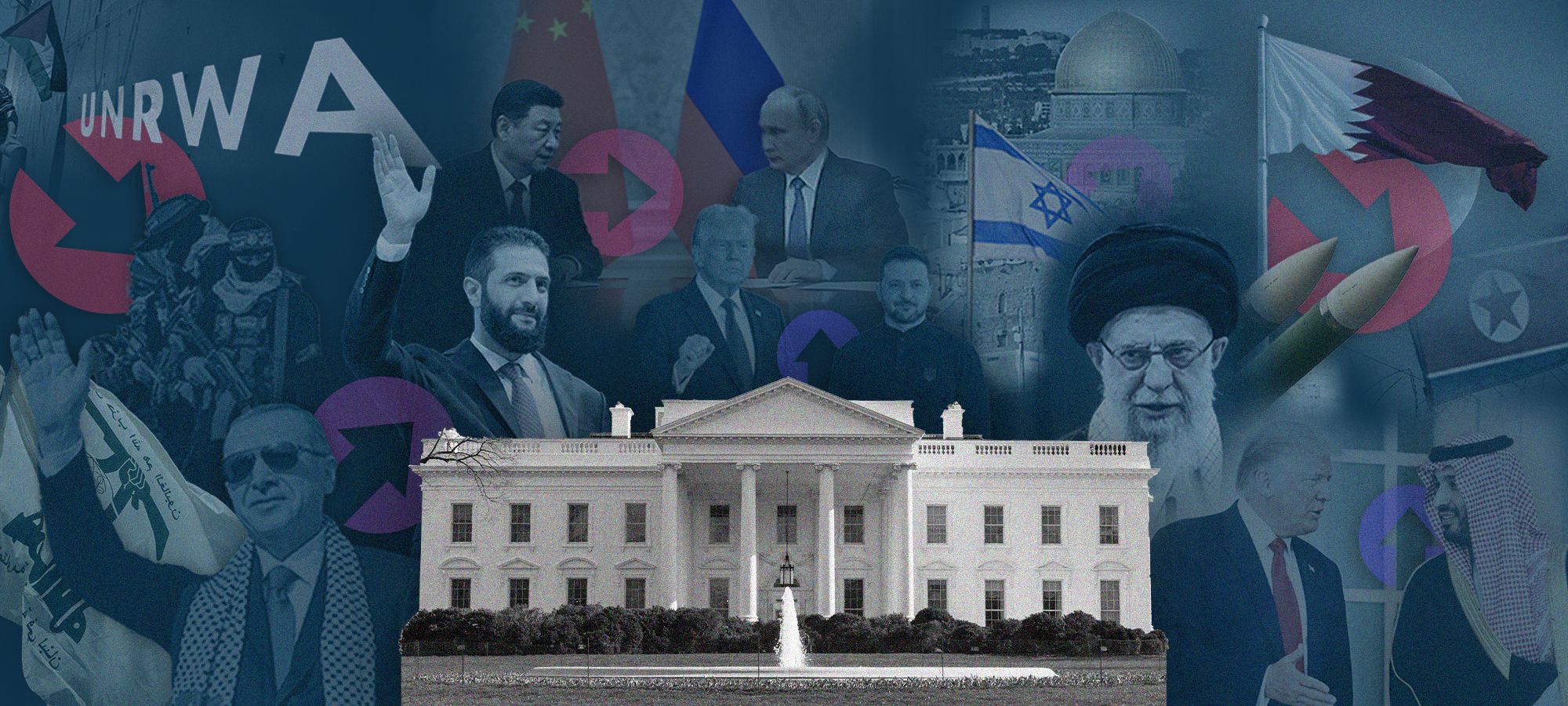
The Bully Pulpit: Foreign Policy Briefing
Foreign Policy Think Tanks
Students will choose one of the following Foreign Policy Philosophies
Students will discuss and debate their philosophy with a Foreign Policy Think Tank
Students will argue their perspective on the Iranian situation to the President and Cabinet, at which point the President will make a decision
Realism
Realism emphasizes national interest and the balance of power. Realists focus on core interests like security and economic strength rather than ideals[1]. They expect conflict is inevitable and advocate using military and diplomatic power to preserve U.S. security. For example, Cold War policy was guided by realism (containment of the USSR), and in 1972 President Nixon opened relations with China primarily to counter Soviet influence[2]. In the simulation, a realist think tank should ask “What preserves U.S. security and influence?” and favor policies that deter threats and protect strategic interests (e.g. strengthening alliances or demonstrating military resolve) in response to Iran’s crisis.
Liberal Internationalism
Liberal Internationalism is a vision of a world order based on open markets, international law, and democracy. Under this approach, states work together through institutions and promote liberal values[3]. In practice, the United States after World War II built a liberal order – creating the United Nations, IMF, World Bank, NATO, and global trade rules – to foster peace and prosperity[4]. A liberal internationalist think tank will stress cooperation and multilateral agreements: for example, they might push for renewing nuclear diplomacy, strengthening the Iran nuclear deal, and involving allies or the UN in any response to Iran’s instability. They would analyze the scenario in terms of international norms and the benefits of working with partners to manage the crisis.
Neoconservatism
Neoconservatism favors an assertive U.S. role, using military and economic power to spread democracy and protect national interests [5]. Neoconservatives believe “unused” American power is wasted and that it is good to promote democratic regimes abroad (the “democratic peace” idea)[5]. Historically this outlook shaped the Reagan and Bush administrations: Reagan’s military buildup helped pressure the Soviet Union, and George W. Bush’s administration used force (the 2003 Iraq War) to remove a regime deemed hostile[6]. In the simulation, a neocon think tank would likely recommend strong action (hard military pressure or even regime change tactics) to counter Iran’s destabilizing behavior. They would analyze Iran’s actions as a threat to U.S. interests and argue that force or coercion (with or without allies) is needed to end nuclear proliferation and hostile aggression.
Isolationism
Isolationism calls for minimal involvement in foreign conflicts and no entangling alliances. Isolationists argue the U.S. should avoid overseas wars and focus on domestic needs[7]. Historically, isolationist sentiment led to Congress rejecting the League of Nations and enacting 1930s Neutrality Acts to prevent U.S. entry into foreign wars[8]. In practice, an isolationist think tank in our simulation would counsel against U.S. intervention in Iran. It would advise prioritizing American security only if directly threatened, limiting aid or sanctions, and otherwise avoiding costly military or diplomatic entanglements. Students in this group should analyze the Iran crisis by asking “Is the Iranian situation worth U.S. blood and treasure?” and generally oppose new commitments abroad.
Multilateralism
Multilateralism emphasizes solving problems through coalitions and international institutions. Countries pool resources and share burdens to tackle global issues, and actions taken together enjoy greater legitimacy[9]. For example, multilateralism is embodied in alliances and groups like NATO or the G7, where major democracies consult on joint responses[10]. A multilateralist think tank would stress working with allies and international bodies on the Iran issue. They might propose convening a UN Security Council session, coordinating a coalition of the willing, or strengthening regional pacts. This approach would analyze the Iran scenario by evaluating how to build consensus – e.g. rallying NATO, Persian Gulf partners, and the IAEA – so that any policy (sanctions, talks, or action) is supported by a broad alliance rather than taken unilaterally.

Scenario Briefing: Iran
Watch this video about the background to the US-Iranian Rivalry
Internal Politics: Iran is facing serious turmoil. Widespread economic hardship and repression have sparked large-scale protests (beginning Dec. 2025) that have grown into open calls for regime change[11]. The government has cracked down violently – by early 2026 an estimated 2,000 demonstrators had been killed[12]. This crisis threatens the stability of Iran’s government and raises questions about who actually holds power in Tehran.
Nuclear Program: Iran’s nuclear ambitions are in tension with international concerns. After U.S. withdrawal from the 2015 deal, Iran accelerated enrichment and reportedly stockpiled near-weapons-grade uranium by mid-2025. The U.S. and Israel launched airstrikes on Iran’s Natanz and Fordow sites in June 2025 to set back its program[13][14]. Iran halted IAEA inspections after those strikes[15], though some 60%-enriched uranium appears to have survived[16]. In short, Iran could quickly resume advanced enrichment, so diplomats worry about a breakout to a bomb at any time.
Regional Tensions: Iran’s regional role is highly contentious. Tehran maintains a hardline “Death to Israel” stance and backs proxy militias (Hezbollah in Lebanon, Hamas in Gaza)[17]. Its allies have launched missile and drone attacks on Israel (for example, Houthi forces in Yemen – aligned with Iran – have fired over 200 missiles at Israel during the 2023–25 Gaza conflict[18]). Iran also pressures U.S. allies in the Gulf; it has had recent negotiations with Saudi Arabia and the UAE, but mutual mistrust remains. Any collapse of the Iranian regime or U.S. attack on Iran could cause a wider conflagration across the Middle East.
U.S. Allies and Interests: The United States has strong strategic ties in the region (with Israel, Saudi Arabia, Gulf states, and NATO partners) and vital interests (energy security, counterterrorism, containing adversaries). Iran’s turmoil and nuclear moves deeply concern these allies. For example, Israel fears any new nuclear deal could legitimize Iran’s program and empower its proxies[17]. U.S. policy must weigh defending allies (and freedom of navigation in the Gulf) against the risk of broader war. In the simulation, students should remember that U.S. friends will press for a firm response, while adversaries (Russia, China) may support or exploit Iran’s chaos. The President will need to consider both military threats (ballistic missiles, regional militias) and diplomatic consequences (sanctions breakdown, refugee flows, global energy markets) when choosing a course of action.
Simulation Instructions
Think Tanks Draft Policies: Organize students into small think tank groups, each assigned one foreign policy outlook (Realism, Liberal Internationalism, etc.). Provide each group the description of its outlook above. In class time, each group should analyze the Iran scenario through its assigned lens and write a brief policy recommendation to the President. They should identify how their worldview guides the choice of actions. For example, a neocon group might recommend a preventive strike or support for Iranian dissidents, while a liberal internationalist group might propose renewed diplomacy via the UN. (It can help to assign different policy positions and let groups caucus and debate them – CFR suggests letting students adopt fixed opinions, caucus, then present and let the “President” decide[19].)
President and Cabinet Roles: Select one student (or the teacher) to play the President, and others as senior cabinet (e.g. Secretary of State, Secretary of Defense, National Security Advisor). Frame this as a National Security Council meeting[20]. After think tanks finish, each group appoints a spokesperson to present its recommended option to the President. The President listens to each briefing in turn; as one CFR simulation guide notes, “each spokesperson reads… their advice. The president… should ask questions” about each proposal[21]. Cabinet members can also ask questions. This step simulates how advisors pitch strategies to the President.
Decision-Making Process: After all presentations, the President and her cabinet discuss the options. Encourage the President to weigh each think tank’s advice against practical considerations: U.S. national interest, alliance commitments, public opinion or re-election concerns, etc. The President should strive to “make decisions based on the best options and the best information”[22] – balancing security, legal, and moral factors. In practice, she might ask for more details (“What about escalation risk?”), request intelligence assessments, or even hold a quick vote. Ultimately the President announces a choice (or compromise) that could range from doing nothing to imposing sanctions or military action. Remind students that in real policy-making (as with the NSC) the President has the final authority but is supposed to consider all vetted options[22].
Alignment with Classroom Goals: Frame the simulation as a step in a “Governing After the Election” exercise. Emphasize that students are advising a generic President (not simulating party politics)[20]. The focus is on applying each foreign policy theory to a complex scenario. After the President decides, debrief by comparing how each outlook influenced the choice and what conflicts arose between strategies. This allows dual-credit U.S. Government students to engage with high-level concepts and practice collaborative policy analysis.
Sources: The outlook descriptions and guidance are based on standard foreign policy theory[2][3][5][7][9]. Historical examples (e.g. League of Nations, Bretton Woods, Reagan-Bush eras) are drawn from the literature[4][6][8]. Simulation structure follows best practices from CFR education resources[19][21][22]. The Iran scenario incorporates current reports on Iran’s protests, nuclear program, and regional actions[11][13][15][18]. All citations are included above.