
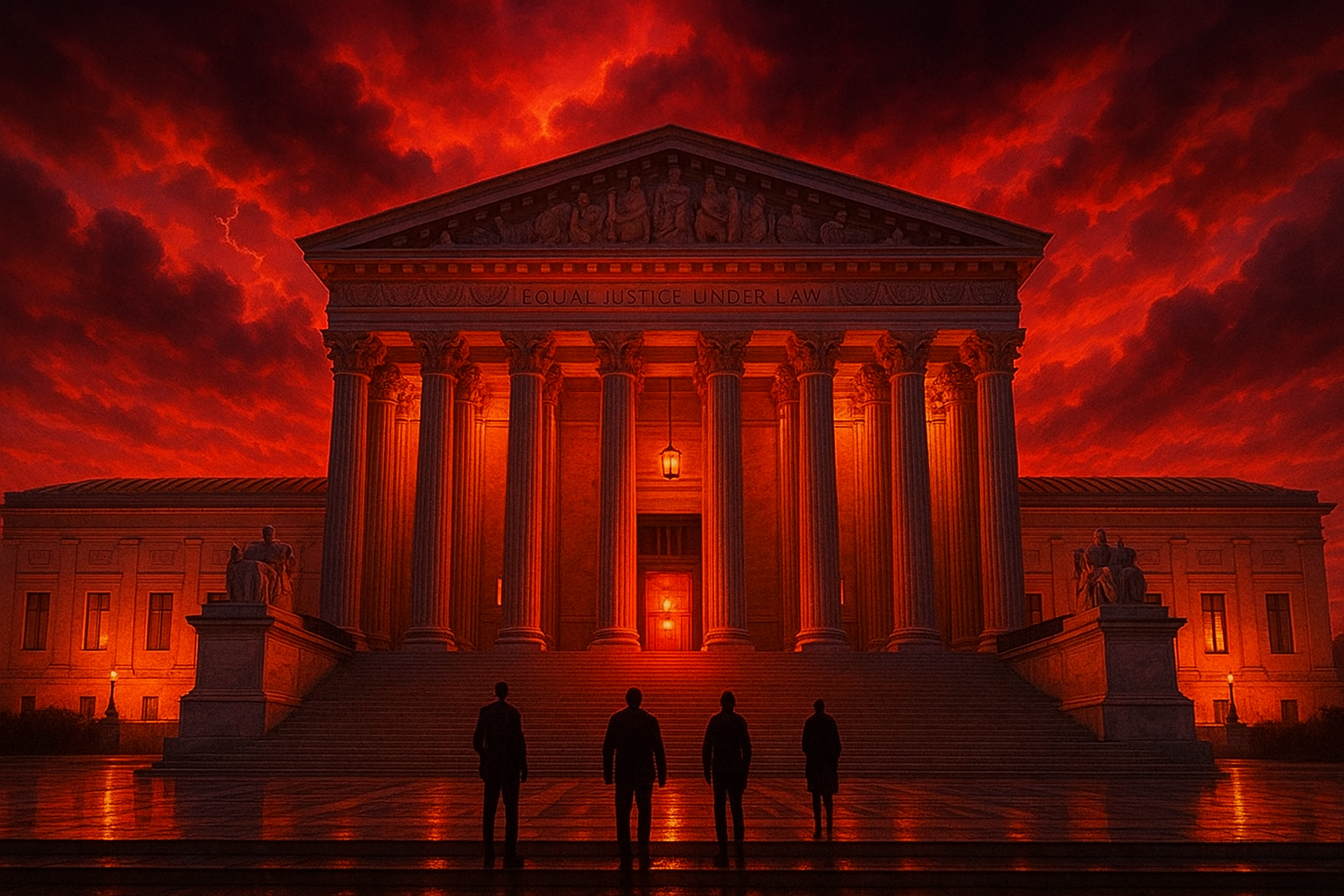
Supreme Court Simulation
Good & Pretti v. Department of Homeland Security
A Supreme Court Simulation on Civil Liberties, Federal Power, and Qualified Immunity
What happens when federal immigration agents kill American citizens during a domestic enforcement operation?
Who decides whether those agents can be held accountable?
And what does the Constitution require when First Amendment freedoms collide with executive power?
In this immersive, college-level Supreme Court simulation, students step into the roles of Justices, attorneys, reporters, activists, and citizens to confront one of the most controversial constitutional doctrines of the modern era: qualified immunity.
Centered on the deaths of Alex Pretti and Renée Good during federal immigration operations in Minnesota, this simulation challenges students to examine:
The limits of the First Amendment right to record law enforcement
The boundaries of the Fourth Amendment’s protection against excessive force
Whether federal officers may be shielded from liability even when constitutional violations occur
The tension between civil liberties and national enforcement policy
Students conduct oral arguments, engage in judicial deliberation, draft majority and dissenting opinions, and experience the real-world consequences of Supreme Court rulings through a dynamic media and public reaction phase.
This is not a scripted debate.
There is no predetermined outcome.
The final ruling depends entirely on constitutional reasoning, persuasion, and judicial philosophy.
By the end of the week, students will understand:
How the Supreme Court evaluates “clearly established law”
Why qualified immunity remains one of the most debated doctrines in American law
How public opinion and media framing influence constitutional legitimacy
What it means for rights to exist — and whether they have remedies
This simulation transforms constitutional law from static doctrine into living controversy.


Roles
Supreme Court Justice - Analyze constitutional questions, question counsel during oral arguments, and deliberate to reach a decision
Law Clerk - Support justices by researching the precedent, summarizing the arguments, and drafting Bench Memos
Amicus Curiae - Provide broader constitutional, historical, and policy perspectives to assist the Court.
Attorney for Petitioner - Argue for the petitioner (plaintiff) that the lower court decision should be reversed due to constitutional violations.
Attorney for Respondent - Argue for the respondent (defendant) that the challenged law or policy is constitutional and should be upheld.
Press - Press and Media participants observe the proceedings and report on the case in an objective, fact-based manner, as well as help determine and report on public opinion about the issues presented in the case.
Case Files
Good & Pretti v. Department of Homeland Security